



How to Promote a Podcast and Grow Your Podcast Audience in 2026
Treat your show like a proper marketing channel. Define a clear target audience, fix the basics in podcast apps and podcast directories, build a focused podcast website, then repurpose each episode across social media, email marketing, collaborations and occasional paid ads. Use analytics to see what works and adjust.

Updated by Jack Freegard, Managing Director at TYX – 24 November 2025
What is podcast promotion?
Most podcast promotion advice starts with social media clips and ends with paid promotion. That's fine as far as it goes. But the shows that grow steadily share one thing: every episode they push out is worth sharing. The audio is clean, the episode titles are clear, and if there's video, it looks intentional. Promotion gets easier when the product earns it.
This guide covers 10 podcast promotion strategies for podcasters with existing shows who want more listeners. They're ordered by foundation first. Fix what podcast apps, search engines, and potential listeners judge before spending time or money driving traffic to something that won't hold people.
At TYX Studios in London, we help podcasters turn great shows into real, measurable growth with better marketing, not just more noise. This guide covers 10 podcast promotion strategies for podcasters with existing shows who want more listeners. They're ordered by foundation first. Fix what podcast apps, search engines, and potential listeners judge before spending time or money driving traffic to something that won't hold people.
1. Fix your foundations and know your target audience
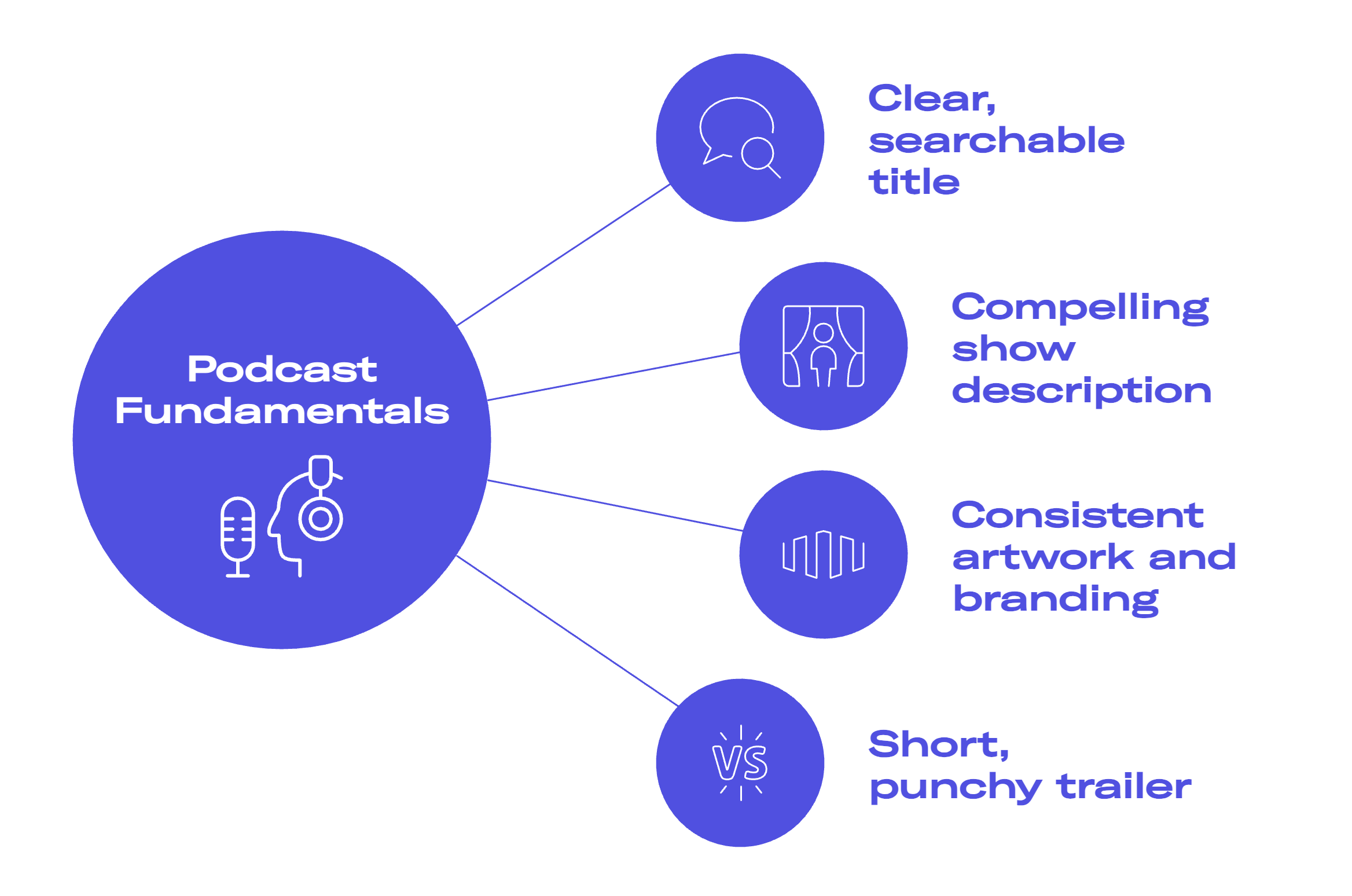
Before you promote your podcast, get the basics right.
Start by defining a clear listener persona. Who are they, what are they specifically interested in, and why should they choose your podcast over other podcasts in the same space? A clear listener persona guides your podcast content and makes every later decision easier.
Check your fundamentals:
- A clear, searchable podcast title that signals the topic and who it is for.
- A compelling show description that speaks to your target audience and potential listeners in plain language.
- Consistent artwork and branding across podcast apps and other social media platforms.
- A short, punchy podcast trailer that explains the value and tells people when to expect new episodes.
Submit your RSS feed to multiple podcast directories and podcast platforms so people can follow you where they already listen. Include Apple Podcasts, Spotify, Amazon Music, via YouTube Studio / RSS connection and popular apps like Pocket Casts and Podcast Addict. The easier it is for listeners to choose their preferred listening app, the less friction you face.
These steps sound basic, but they’re what separate a good idea from a great podcast that doesn’t get lost in the feed.
2. Build and optimise your podcast website
.png)
Algorithms change. Your own podcast website or a dedicated section on your main site is something you control.
A good podcast website can:
- Help your podcast grow through search engines.
- Give you a home for transcripts, show notes and bonus content.
- Act as a hub for a media kit, sponsor details and your email marketing list.
Every podcast episode should have its own page in written form, with:
- A short summary that explains the value.
- Detailed show notes with links you mention in the recording.
- An embedded player or direct link buttons to major podcast apps.
- A transcript where possible.
This structure supports podcast SEO and general search engine optimization. It helps listeners find past episodes on specific topics and gives you something to link to when you promote your podcast in a blog post, guest article or social media post.
Remember to optimise basic on page elements:
- Add relevant keywords naturally to headings and copy.
- Use meta descriptions and clean URLs.
- Make sure your site is fast and mobile friendly.
Your podcast website does not need to be huge, but it does need to be intentional.
3. Make podcast SEO work for you
.png)
seo basics podcast episode infographic
Podcast SEO is the practice of using keywords, tags and formatting to boost the visibility of your podcast content on search engines and inside podcast apps.
Focus on:
- Clear and descriptive episode titles that include relevant keywords and still read naturally. These can significantly impact download numbers.
- Short, informative descriptions that help listeners find episodes on the topics they care about.
- Adding transcripts for key episodes to enhance searchability for both people and search engines.
- Listing your show on as many reputable podcast directories as makes sense.
On your podcast website, add relevant keywords to titles and headings, but avoid keyword stuffing. Use meta tags and structured formatting so search engines can understand your pages better.
Regularly publishing new episodes and keeping your RSS feed healthy also helps with podcast growth by signalling that your show is active. Use analytics from your podcast host and platforms to see which topics, titles and formats your podcast audience responds to, then let that data shape future episodes.
4. Turn each podcast episode into social media content
.png)
Social media can be an extremely powerful tool for podcast marketing when you use it deliberately rather than posting at random.
Start by choosing 1 or 2 primary social media platforms where your target audience already spends time. That might be Instagram and Facebook groups for lifestyle shows, LinkedIn for B2B, or TikTok and YouTube Shorts for a younger or more visual audience.
From each podcast episode:
- Cut 1 to 3 audio snippets and turn them into audiograms. Audiograms visually grab your audio and are perfect for short social media posts.
- Create 1 to 2 video clips if you record on camera. Share them as Reels, Shorts or native uploads on other social media platforms.
- Pull 2 to 3 strong quotes for image graphics or carousels.
When you share, always include:
- A simple explanation of why this clip matters.
- A clear call to action that encourages listeners to check out the full episode.
- A direct link in your bio, comments or description so people can jump straight into the new episode.
A multi channel strategy that uses high quality content and consistent, engaging social media posts is far more effective than blasting one link everywhere once.
Over time, treat this as a repeatable system for every new episode, not something you reinvent each week.
5. Use email marketing to deepen relationships
.png)
Email marketing is a great way to keep in touch with your listeners without fighting social algorithms. It works especially well when you already have a small but loyal existing audience.
Collect emails through your podcast website with a simple signup form, ideally near your player or in your show notes. Offer something specific in return, such as:
- Early access to new episodes.
- Bonus content, extended interviews or behind the scenes notes.
- A simple resource that supports your niche.
Use a newsletter to provide episode alerts, short reflections, behind the scenes content or exclusive extras. Using email to share show notes, key links or relevant offers can complement your audio without feeling repetitive.
Email marketing can help turn casual listeners into loyal fans. A valuable and consistent newsletter can even encourage subscribers to forward it to their networks and reach new audiences you would never find alone.
Pay attention to your calls to action. Optimising your CTAs in emails, such as a button to promote your podcast or a link to a specific podcast episode, can significantly impact engagement.
6. Collaborate and cross promote with other creators
.png)
One of the most effective podcast marketing strategies for any podcast creator is to get in front of other people’s audiences who already listen to spoken content.
Look for like minded podcasters and creators who share a similar target audience but are not direct competitors. Candidates for guest appearances should be relevant industry experts or influencers who may promote their episode to their own followers.
Ways to collaborate and cross promote:
- Swap short host read spots with other podcasts and cross promote each other’s shows.
- Record a joint episode that gets released in both feeds at the same time.
- Create a montage episode where you ask multiple podcast hosts one question and compile their answers.
- Co write a blog post or appear on each other’s channels to promote your podcast in written form.
Cross promotion is a free way to promote your podcast and introduce it to new audiences. Using host read promotions for cross promotion can be especially effective, because they feel like genuine recommendations rather than generic podcast ads.
When you invite guests, make it easy for them to share:
- Send them branded graphics, audio snippets and video clips.
- Include copy they can paste into social media posts.
- Provide a direct link to the episode on your podcast website or preferred listening app.
Podcast guests can supplement your marketing efforts by promoting the episode to their networks if you give them the tools to do it.
7. Turn your audience into a community
.png)
Your existing audience is one of your most powerful marketing assets. If you want your podcast growth to feel steady rather than spiky, build a sense of community.
Simple moves inside the show:
- Mention listeners by name when you read messages or reviews.
- Add a listener intro at the start of an episode where a fan explains why they listen.
- Use a clear call to action in every podcast episode to guide people toward the next step, such as following, sharing or sending in a question, and tease what’s coming in the next episode so they’ve got a reason to stay subscribed.
Outside the audio:
- Encourage listeners to share favourite podcast episodes with one friend.
- Run small contests or a listener referral challenge where you reward people for bringing in new listeners with shoutouts or small gifts.
- Use in person events or live recordings to deepen relationships with people who already care.
You can also get creative:
- Launch a themed mini series to reach new audiences with focused messaging.
- Create a bingo card related to your show that encourages sharing.
- Send simple podcast themed merchandise to superfans as a thank you.
- Build a “first episode club” playlist that highlights good starting points so new listeners find the best place to begin rather than just the first episode you ever made.
All of this turns your existing audience into advocates and makes your marketing efforts feel more human.
8. Experiment with creative bonus content
.png)
Bonus content can make your feed feel more alive and give people extra reasons to subscribe.
Ideas include:
- Exclusive mini episodes between main releases.
- Extended interviews with high profile guests.
- Behind the scenes conversations about how you make the show.
- Short Q and A episodes that answer listener questions and tease future episodes.
You can offer some bonus content only in your newsletter or at the end of certain episodes. You might also use QR codes on flyers, stickers or conference materials to link directly to a special bonus episode.
These touches help your show stand out from new podcasts that only publish standard interview episodes and never experiment.
9. Add paid ads once your foundations work
.png)
Paid advertising should be fuel, not fire control. Only spend money once your positioning, website, podcast SEO and social systems are already in place.
When you are ready, there are three main channels:
- Social media ads to boost clips or posts that already perform well.
- Google Ads or search ads that target niche queries where your show delivers clear value.
- Podcast ads inside other podcasts that reach a similar target audience.
You can run a short podcast ad on shows your ideal listener already enjoys, or test paid ads in listening apps and podcast platforms that offer sponsored slots.
A very simple starting framework:
Start small, set clear goals for each campaign and track whether it generates new listeners and long term engagement, not just clicks.
10. Measure your podcast marketing and refine
.png)
To know which podcast promotion strategies work, you need to measure results and adjust.
Key steps:
- Use analytics from your podcast host and major podcast apps to track downloads, listener retention and engagement for each podcast episode.
- Encourage listeners to leave reviews and ratings, especially on Apple Podcasts, since this can improve your visibility there.
- Look at engagement metrics such as comments, shares and replies on social media posts and emails to see which topics land best.
- Track the source of new listeners by using short surveys, link tracking or promo codes in different channels.
Define what success means for your show: it might be audience size, leads, community depth or something else. Setting realistic goals for podcast growth helps you stay committed rather than disillusioned.
Regularly test different podcast marketing strategies:
- Try alternative episode titles for similar topics.
- Adjust your show notes format to help listeners find what they need faster.
- Experiment with different calls to action in episodes and emails.
Listener feedback is one of your most valuable tools. Ask how people discovered your show, which past episodes they loved, and what they would like more of. Use that feedback to guide both your content and your marketing efforts.
Channel by channel: where to promote your podcast
To tie everything together, here is a simple checklist of where and how to promote your podcast:
- Podcast apps and platforms: Strong show description, clear episode titles, consistent artwork, regular new episodes.
- Podcast website: SEO friendly pages, useful show notes, transcripts, newsletter signup, media kit and sponsor information.
- Social media channels: Clips, audiograms, carousels, behind the scenes, social media posts that add value instead of just pushing links.
- Email marketing: Episode alerts, curated recaps, bonus content and direct link buttons to your latest release.
- Guest appearances and PR: Other podcasts, blogs with a similar target audience, niche communities and Facebook groups.
- In person events: Live recordings, talks and meetups where you can point people straight to your feed using QR codes.
Used together, these podcast marketing strategies create a flywheel where each new episode has a clear path to reach both new listeners and your existing audience.
Quick podcast promotion checkist
Elevate your podcast at TYX studios

Promotion works best when every episode you're pushing out looks and sounds worth sharing. TYX Studios has three podcast studios at Tileyard London with 4K capture, broadcast-grade audio, and a technician on every session. Studio 1 is the latest addition, purpose-built for flexible, visually polished recordings with ceiling-rigged lighting and swappable backdrops from £300 per session.
Our podcast production services also cover social clips, editing, and finished assets designed to perform across platforms. Less time in post, more time getting your show in front of the right people.
Frequently Asked Questions
TYX can handle the heavy lifting so you can focus on the content. We help you plan your show, record in pro studios, then take care of editing, mixing, and sound design. On top of that, we can film video podcasts, create social clips, and support distribution so each episode looks and sounds on-brand and is ready to promote across all your channels.
For new podcasts, start with foundations. Make your show easy to understand, submit it to key podcast directories, build a simple podcast website and focus on one or two social media platforms. Share strong clips, ask friends and early listeners to leave reviews, and encourage listeners to share a favourite episode with one person who would be the right audience.
No. Choose the social media platforms where your target audience already spends time and show up there consistently. It is better to be excellent on two social media channels than thinly spread across five. Over time, you can test other social media platforms if you have the capacity.
Regularity matters more than raw volume. Choose a cadence you can keep up with, such as weekly or fortnightly new episodes, and stick to it. Regularly publishing new episode drops helps both listeners and platforms trust your show.
Paid ads are optional. They can accelerate podcast growth when your fundamentals work, but they cannot fix weak content or unclear positioning. Focus first on organic podcast promotion through SEO, email, social content and cross promotion with other podcasters, then use paid ads to scale what already resonates.
Be specific in your positioning, your podcast title and your episode titles. Speak clearly to a defined listener persona and create podcast content that solves real problems or delivers a clear experience. When you cross promote, choose shows and creators who share a similar target audience rather than chasing a huge audience that is not a good fit.
Yes, if it has a clear job. A podcast works best as a relationship and trust channel, not a quick lead hack. When you’re specific about who it’s for, publish consistently, and plug it into your website, email and socials, it can warm up buyers far better than another generic blog post.
The strategy can be cheap; time is usually the main cost:
- £0–£100/month: DIY: website hosting, basic tools, your time
- £100–£500/month: Light spend: simple design help, clipping tools, small social boosts
- £500+ /month: Paid ads, outsourced editing, or a done-for-you marketing partner
The key is to start lean, track what actually moves listeners, and only scale spend on the parts that clearly work.
You usually don’t “engineer” viral; you engineer shareable moments:
- Episodes built around a strong, simple hook
- Clear, bold opinions or very practical “I need to send this to someone” value
- Short, punchy clips that work even if someone has never heard of you
If a clip pops off, great, but your real win is turning that spike into subscribers, email signups and website visitors so the attention sticks around after the spike is over.
If you're averaging around 10,000-50,000 downloads per episode, then you should earn between £400-700 a month.This will vary depending on your podcast platform, some will pay more than others. You can increase how much you earn through sponsorships, ads, and affiliate marketing.

How to Start a Podcast in 2026: Full Step-by-Step Guide
Learn how to create a podcast in 2026 with a practical, step-by-step system for planning, recording, hosting, editing, and launching across audio and video.